When Doing Nothing is the Work
What I’m learning about sitting with what’s hard instead of reacting.
I hang up the phone and look outside. The sky is dark, heavy with clouds. Rain is in the forecast. My mind spins with unsettled thoughts, leaving me with feelings of fear, anger, and a need to fix or control. My insides tighten, and my shoulders ache from a burden I don’t want to carry. As I take another look outside, I note that my mood most definitely reflects the weather.
I’ve done enough inner work to know what is happening within me. I can feel parts of me becoming activated from the disturbing news I just received in the phone call. The need to fix, figure something out, and the fear of what will happen if I don’t, well up inside me. In this moment, I know what I need to do.
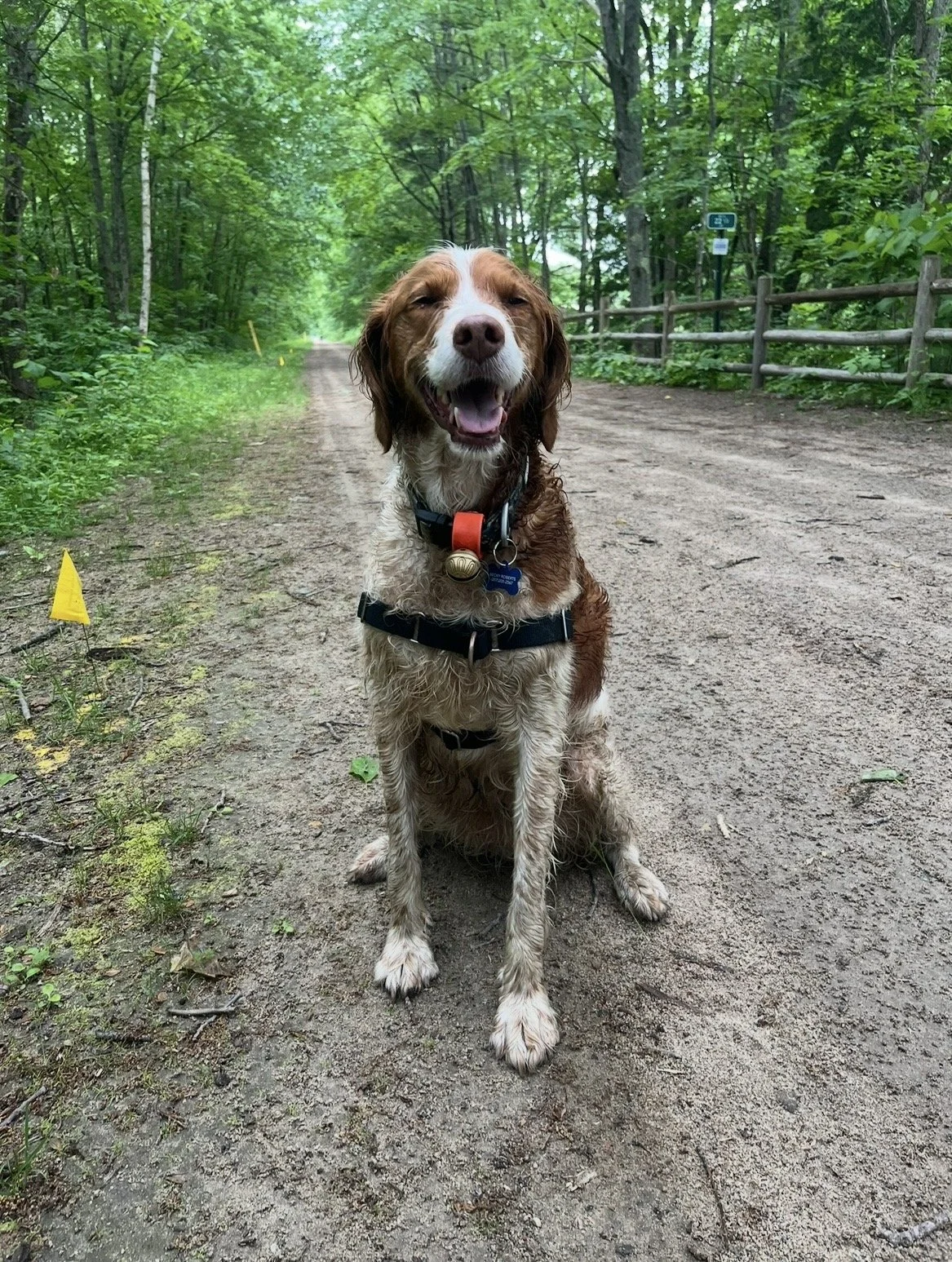
I walk to the coat closet, pull out my raincoat and boots, and put them on. Rosie, my beloved ten-year-old Brittany, looks at me as if to say, “I’m with you.” I grab her leash, and we walk out the front door.
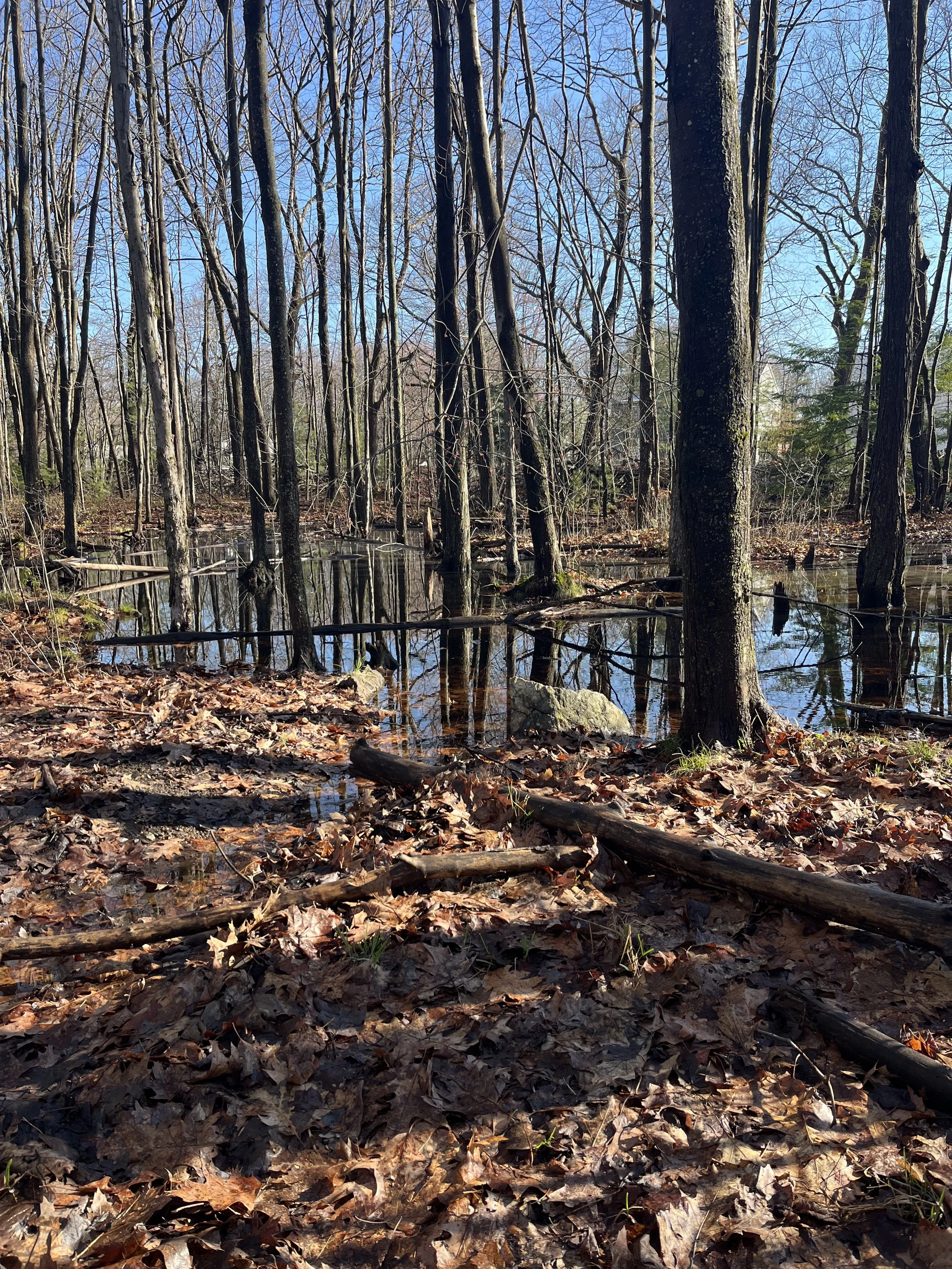
Raindrops begin to fall as we make our way to the trail about a block from our house. The trail is my place— a place to clear my head and move the tension from my body. It’s spring in Maine, and the trees are beginning to bud. Vernal pools, created by the melting snow, dot the landscape, and the sound of peepers is in the air. Moss lining the trail is turning a sparkling, vibrant green, the color emphasized by the clouds and rain.
Today, the trail is empty of other walkers and runners who have likely scurried home out of the rain. I am grateful for the quiet and the space, and as I walk, I notice my breath evening out. Rosie trots ahead, sniffing as I follow at a brisk pace. The rain has started in earnest, and I take deep, intentional breaths as drops fall against my face. About a half mile in, I can feel the tension in my stomach and shoulders begin to ease.
I take a deep breath and exhale. There is something very soothing about being in the woods in the rain. Along the trail, we pass a brook, and Rosie wades in, lapping gently at the water. I smile as I watch. She is enjoying our rainy walk, completely present and accepting of her wet coat and muddy paws. She looks at me, blinking raindrops out of her eyes. “Want to keep going?” I say. She wags her tail and jumps back onto the trail, trotting alongside me as we make our way further into the woods.
We continue on our way, my feet connecting to the trail with each step. I can feel the rain soaking through my jacket, but I am grateful to be here. My mind begins to settle, and I notice myself feeling calmer, more connected to myself, Rosie, and the trees around me.
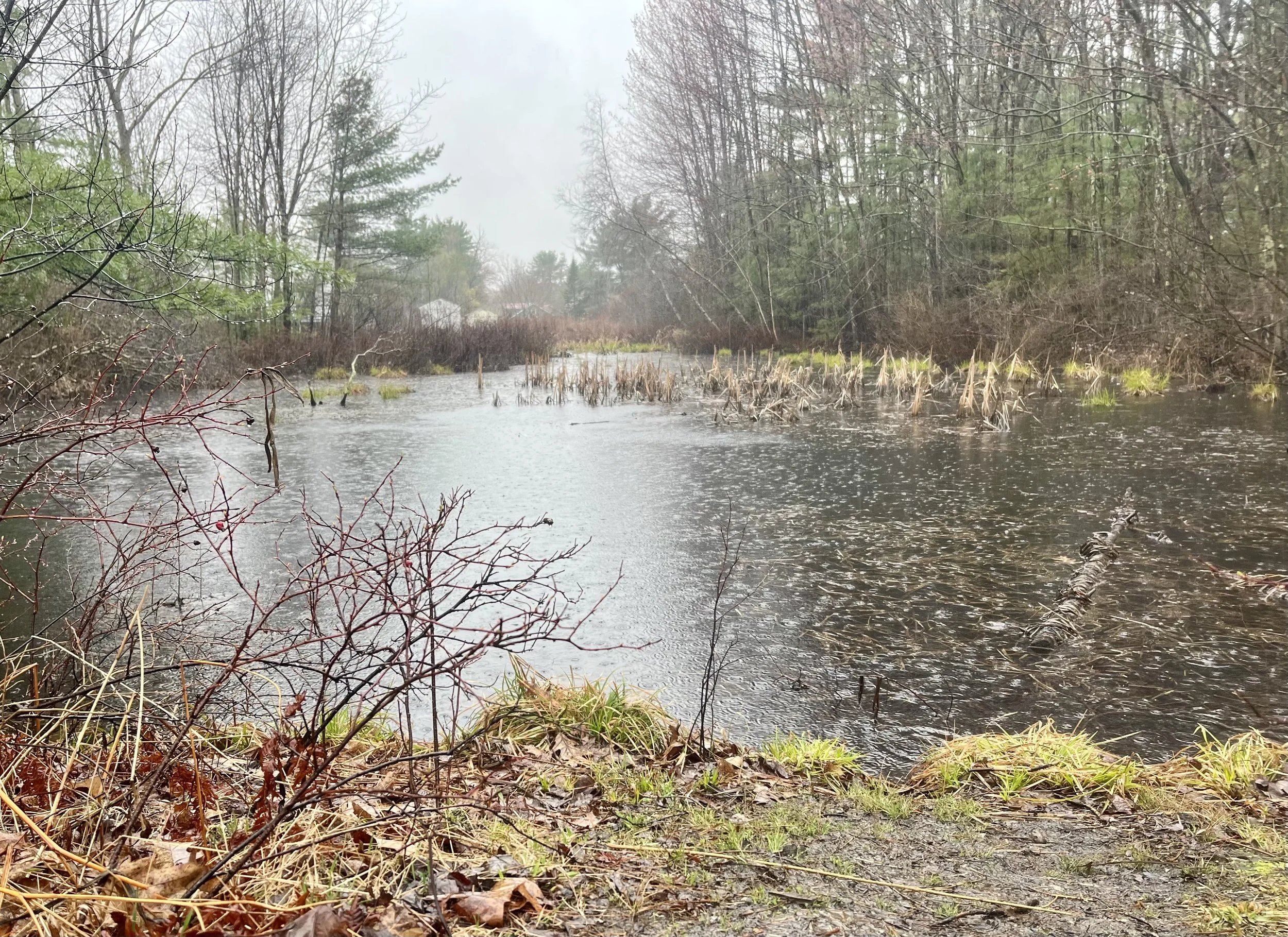
A little further, and the trail opens up to a field. We follow along as it meanders through the tall grass, just coming back to life after the long winter. Pausing at a small pond nestled against a stand of birch trees, Rosie sniffs around the banks. I watch raindrops falling on the water, creating small ripples across the pond's surface. This is truly beautiful, I think, and I feel more at peace in this moment than I’ve felt since we left the house.
Standing there, an image comes to mind along with a quote I heard years ago. I imagine Lao Tzu’s likeness as I recite the words, “Muddy water, let stand, becomes clear”, and I suddenly realize the significance of taking this walk with Rosie in the rain.
I breathe deeply as I think back to the phone call and the different parts of me that became reactive with the unsettling news I received—the fear, the anger, the need to do something. And slowly, I could feel something shifting. Not because I had solved anything— but because I had given it space.
And yet, this choice did not come naturally to me. When something stirs me up—when the water gets muddy—the urge to reach in, fix it, figure it out, make a plan, is often unbearably intense. Even as I walked that day in the woods, part of me still wanted to turn around. To check my phone. To do something.
Choosing to go for a walk instead of letting those reactive parts take over did not lessen the challenge or “fix” the problem. Choosing the walk gave me the space, the quiet, and the stillness my system needed to settle, so that clarity and calm could rise.
For many of us, the voice that commands us to do something in these moments is often louder than the quiet voice within guiding us to pause, step back, and breathe. Doing nothing can feel counterintuitive, irresponsible— somehow wrong. And inaction, allowing our reactive parts to soften and settle, can be scary, especially if we see our role as fixing, managing, and holding it together.
For me, clarity, calm, and the courage to respond thoughtfully don’t come from reacting and thinking harder. It arrives in the space and stillness I give myself to be with my feelings— and to let my system settle.
Looking out at the pond, tension seeps from my body, and I notice that the earlier feelings of anger, fear, and the need to fix soften and begin to recede. That commanding voice urging me to check my phone, make a plan, and figure it out is quieted. I feel more grounded, centered, and a growing sense of calm and clarity is surfacing.
As we make our way home, retracing our fraught steps, I intentionally slow down. From the place of calm and clarity, I reach for curiosity and approach the fear and anger, asking what they want me to know. The answers surprise me as I realize, once again, that these parts are only trying to protect me. They truly have my best interests at heart, even though they can wreak havoc in my life. I take a few more minutes to extend some calm and compassion to these parts, and they soften further.
I am learning.
“That moment when challenges arise and parts of us become activated is an invitation to slow down, step away, and breathe. It’s a process that asks for awareness—to notice what’s rising. And presence—to pause long enough to meet it with care. ”
It’s when we make some space for this process to unfold that we find the resources we need to move forward. The clarity to see a challenge clearly, the calm of non-reactivity, the curiosity to lean in and listen, the creativity to discover a solution, and the courage and confidence to move forward from this place.
The next day, Rosie and I return to the woods for our walk. The rain has stopped, and there’s that clean, shimmering feel among the trees and undergrowth that only comes after a rainstorm. We make our way back to the pond, and I stop to admire its glistening surface, thankful for the potential of a new day.
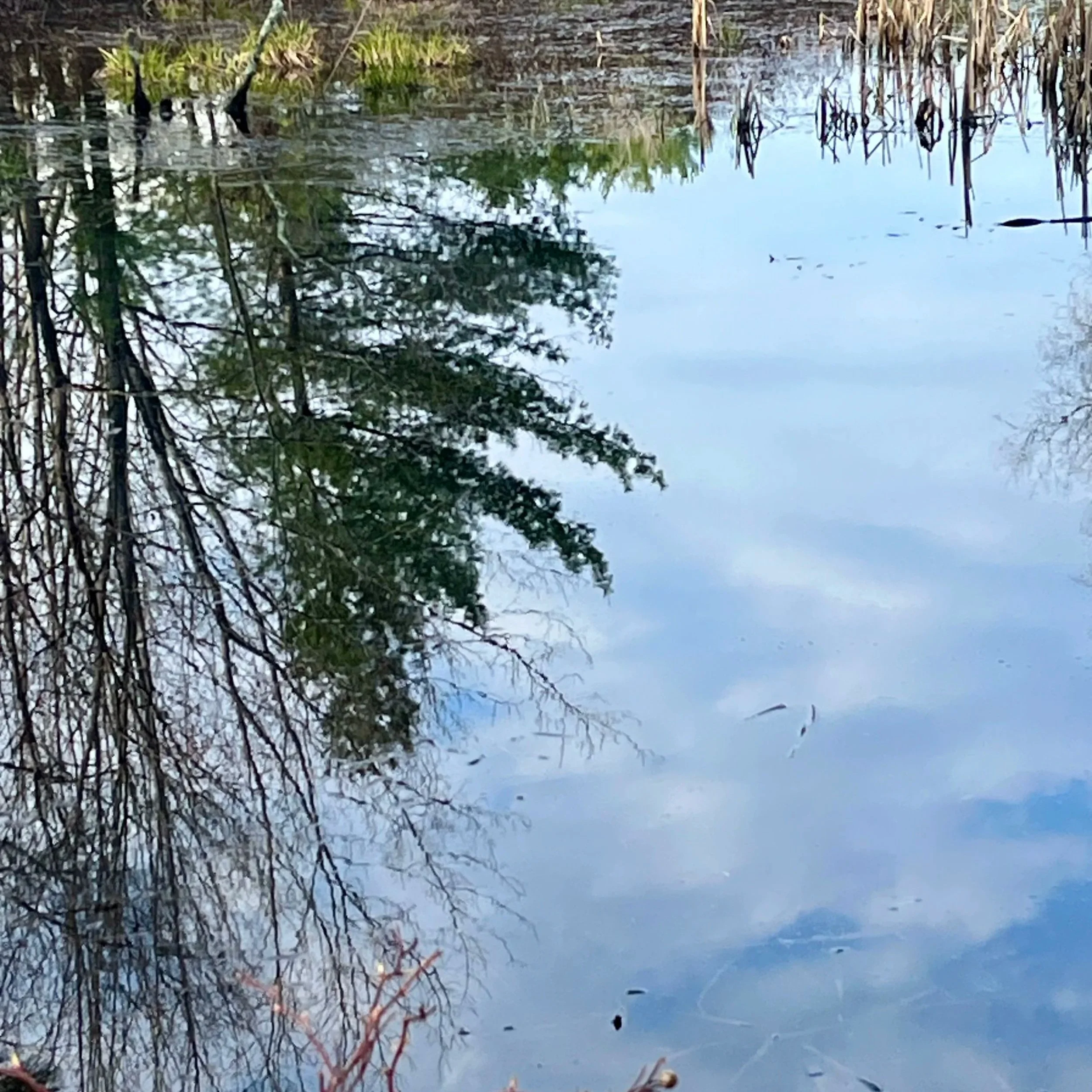
I watch a birch tassel fall onto the pond's surface, creating gentle ripples across the water. After a moment, the ripples fade, replaced by the beautiful reflection of the blue sky. It’s a reminder that clarity and beauty rise in the pause, when things have the space they need to settle.
In moments like these,
maybe the work isn’t to do more.
Or try harder.
Maybe the work is to be still long enough
for the water to become clear.