What I’m learning about softening inner reactivity so clarity can emerge.
It’s the last Saturday of May, Memorial Day weekend, and the weather is beautiful. I wake up to the sun streaming through the windows and a soft breeze blowing across the room. I’m so looking forward to working in our gardens- getting them ready for the summer season. We bought our home less than a year ago, and with it came several large flower beds that have been lying dormant all winter. I’m excited to begin to clear out the tangle of leaves and sticks from winter, along with the season’s first weeds, to discover what is sprouting underneath.
As I sip my coffee downstairs, I think back to the previous afternoon: my attempt to finish my work and tie up loose ends before the weekend. Toward the end of the day, I was presented with a challenge that I just didn’t have the bandwidth to think through. Suddenly, I remember. Leaving a dilemma unresolved this way is unlike me, but I’ve come to learn that taking action from a hurried, fraught place does not serve me or the situation at hand, so I left it, trusting that time and space would help me think through the impasse.
Perfect, I think. Now I have the morning to work out in the garden, a quiet, peaceful place for me to reflect and find answers I am seeking.
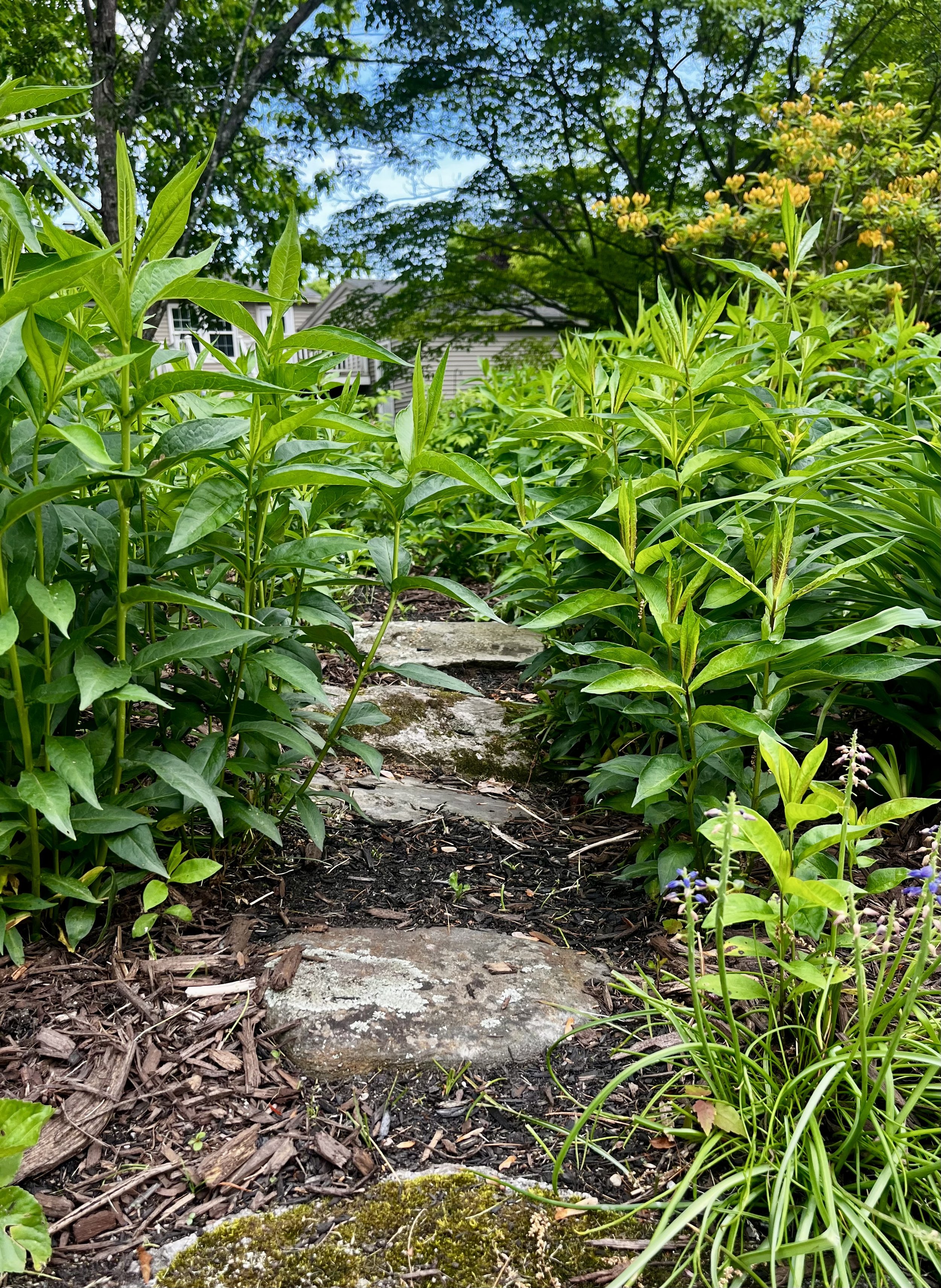
As I put on my gardening gloves, I feel my body tensing. From where I stand, I can hear a neighbor mowing their lawn. Close by, a leaf blower is fired up, clearing away winter debris. Across the street, I hear the continuous beeping of a work truck as it backs up, then sits in reverse, its backup alarm echoing down our street.
I take a deep breath, unwind my shoulders, and get to work. My weed bucket slowly fills as the neighborhood continues to wake up, and I realize that all the noise begins to stir up some inner turmoil. A complaining voice tells me that all this noise is intolerable; a disappointed voice longs for the promise of a quiet garden and time to think, and a stressed voice fears the dilemma from the day before won’t be resolved.
Frustrated, I consider packing up my gardening gear to head back inside, but I pause, realizing I have a choice. I gently acknowledge the parts of me that are adding to the morning's chaos, and decide to relax into my work, knowing that reacting to the noise would only add to the tension in my body and the unresolved stress from yesterday’s challenge.
The commotion in the neighborhood persists as I move along in one of the garden beds — clearing away dead leaves and small sticks, and pulling weeds that threaten to overtake the perennials just beginning to reappear from last season. I become absorbed in my gardening tasks as the neighborhood buzz fades away into a steady din.
As I clear away the area around a bed of phlox, I notice an earthworm making its way back into the soil after being displaced by my work. It moves with ease, seemingly unfazed by this disruption to its morning. I smile and exhale, noticing that my shoulders begin to soften as I observe the worm’s progress. With my hands in the soil, hidden among the growing phlox, I know that I am in my element, and I begin to breathe just a little deeper.
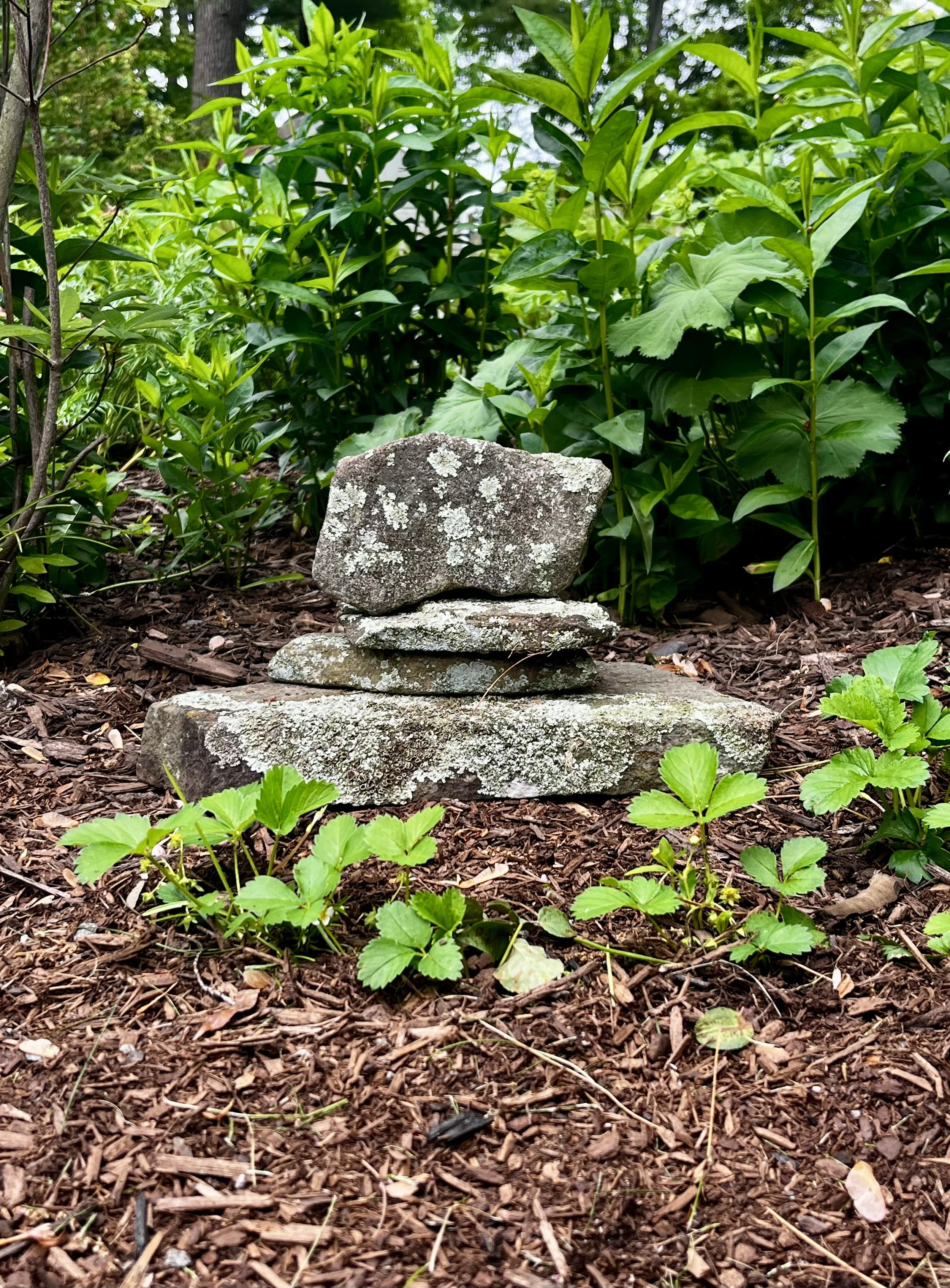
Next, I find some stones that had fallen away from the rock wall over the winter and stop to admire the beautiful lichen growing on their surface. In a moment of inspiration, I find a small open space in the garden bed and balance them to create a simple garden monument. By now, the noise in the neighborhood has receded into the background of my awareness, and I move along to another flower bed.
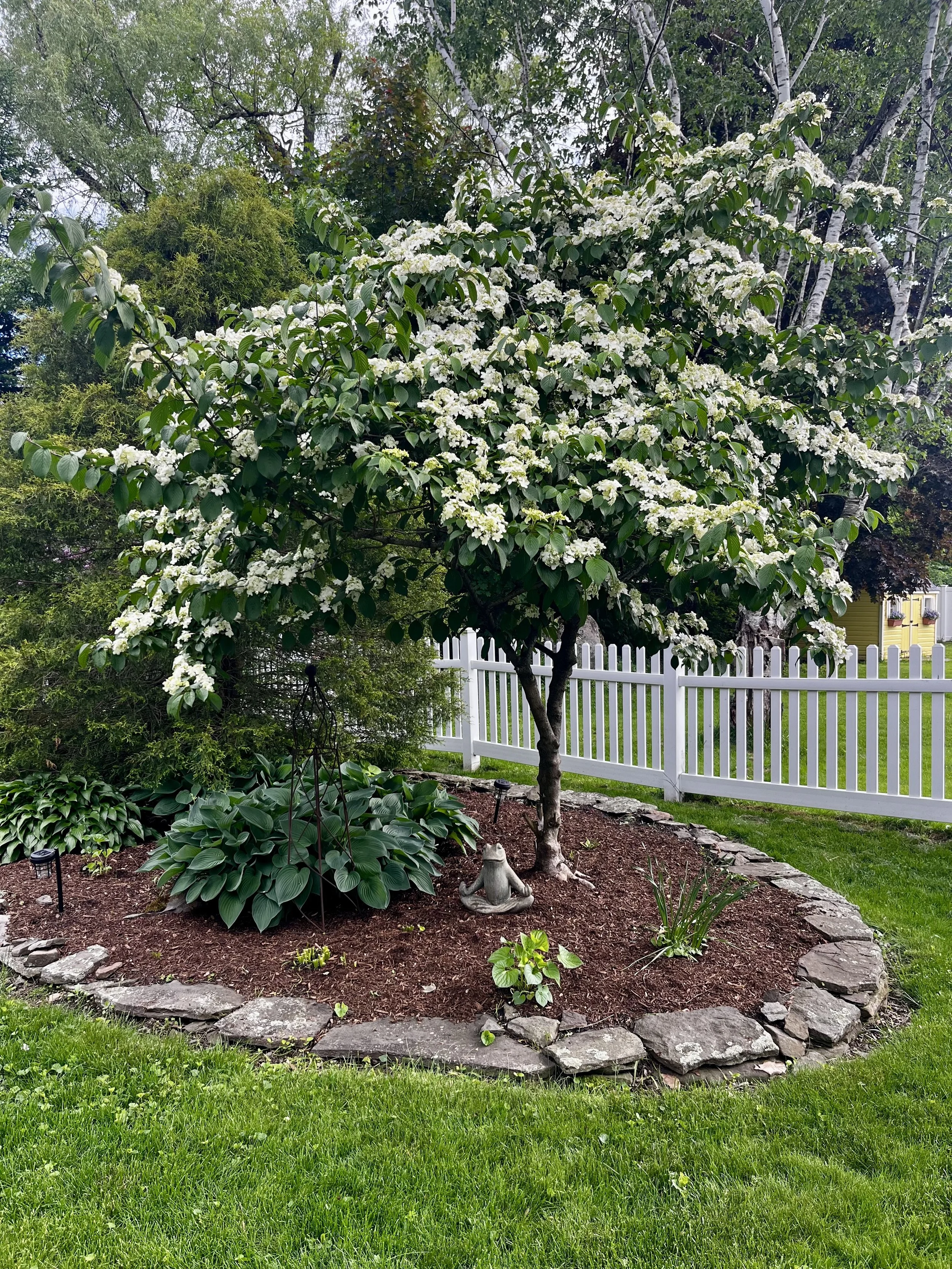
The large variegated leaves of a hosta meet me as I make my way into the next bed. Adjacent to the hosta is a peony just beginning to bud, and I can see the deep pink of the flower showing through the outer green layer of the early bloom. I use my small garden rake to clear away the debris from the base of the plant, and notice two halves of a robin’s egg lying amidst the dead leaves. Looking up into the crabapple tree growing in the center of the garden, I can see a nest, and I sit quietly as a robin flies back and forth between the crabapple and a pine tree in the neighbor’s yard.
As I sit and watch, I notice for the first time that morning that I am relaxed. The earlier tension that threatened to hijack my morning has left my body, and the unsettled parts of myself that were creating so much noise have quieted. I can sense a calm spaciousness within me as I place the broken egg aside and get up to empty my weed bucket into the compost pile hidden in the corner of the yard.
I relish the inner space and calm I now feel, realizing that it could not have been chased or forced. That spaciousness emerged when conditions allowed me to detach from the inner noise with presence and care: by acknowledging the parts of me that were creating a commotion and allowing them space to be, while gently engaging with the work at hand.
From this vantage point, I can see that inner noise was made up of parts of me that were attempting to protect and help. The part that felt the noise of the neighborhood was intolerable understood that my system needed a quiet morning. The disappointed part wanted me to return to the house to find some peace, and the stressed part wanted to help me resolve the challenge from the previous afternoon. The inner space and calm I now experience emerged not because I overpowered my protective parts, but because I created enough internal safety for them to stop shouting so loudly.
As I settle back into the garden bed, I suddenly notice that the noise in the neighborhood has stopped, and I can hear the birds as they flit and fly from our birdfeeders into the trees and back again. The windchimes on our deck sway gently in the breeze, and I breathe deeply, giving myself a few moments to revel in the peaceful sounds that emerge from the absence of all the noise.
I return to my work, slowly refilling the weed bucket. Surprised to find that a resolution to yesterday’s dilemma was also beginning to emerge, I continue to enjoy the peace and quiet of the garden. From the internal space that I created, I allow the answers I need to reveal themselves to me. As I finish clearing away the debris, I wonder how something similar happens inside of us.
Maybe our clarity and inner knowing don’t disappear, but simply become hidden beneath layers of noise like urgency, fear, and distraction.
Later that day, I spend a few moments in my home office tying up the loose ends from the day before, and I am reminded that the answers we seek rarely arrive through force or urgency.
Clarity and inner knowing emerge when interference quiets.
But creating space and inviting stillness is sometimes not enough.
When we create conditions that soften our inner noise, when we meet our reactive parts with care and gently detach, something opens within us.
It is here that we are invited to listen.
And it is here that we access the clarity and the deeper knowing we seek.