Reflections from a life coach for women in midlife.
I park the car, and my daughter, Kate, and I step out into the cool September morning in Northwestern Maine. We pull our backpacks from the car, and I finish packing water, lunch, swimsuits, towels, and extra clothing. As we make our way to the trailhead, I’m glad that I put on an extra layer. The leaves are just starting to change, and there is a chill in the air, but the sun is out, and we have the entire day to enjoy our favorite hike together up Tumbledown Mountain.
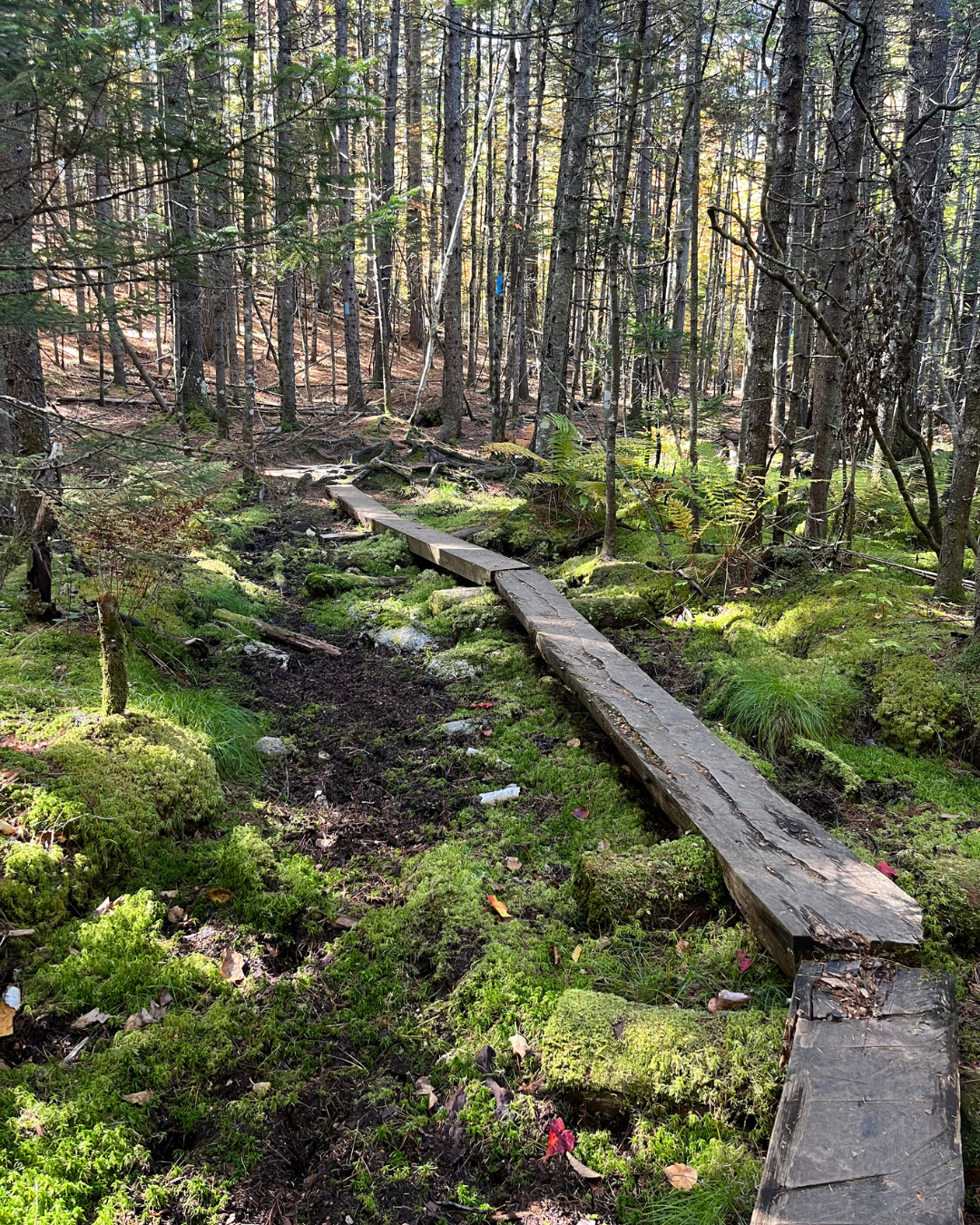
The trail is empty of most of the summer tourists and outdoor enthusiasts, and as we find our way into the woods, we are full of anticipation for the day. The trail meanders past enormous old trees, moss-covered rocks, and ferns, and the smell of pine and earth is intoxicating. My pack fits snugly against my back and is a little heavy, but it feels good to be prepared. There’s a certain comfort in knowing that we will have everything we need for our adventure.
Letting go of what is no longer needed
As we forge ahead, I notice the sun climbing higher in the sky, the trail growing steeper, and the terrain becoming rockier, and I stop to shed layers and stuff them in the top of my pack. What I thought was necessary is starting to feel like too much, and as we move on, I begin to slow my pace and stop several times just to catch my breath. Meanwhile, Kate—traveling light— moves easily ahead of me, scrambling over rocks with the agility and confidence of youth. I take a minute to admire her speed as she makes her way a good distance up the trail, and as many of us do, I catch myself
comparing her outward ease against my inward effort, and then I smile to myself as I remember everything I’m carrying in my pack.
relinquishing what isn’t mine to carry
As Kate and I continue our hike and the trail grows steeper, I feel my backpack getting heavier with every step. When we stop again to catch our breath, we both chuckle at how much I unload from my pack just to grab our water bottles and a snack. As I look at Kate’s pack, I realize I am carrying most of our supplies and begin to hand over her lunch, extra clothes, bathing suit, and towel. She rolls her eyes in jest, laughs, loads up her pack, and we continue up the trail as I feel something shift within. The trail doesn’t get easier; in fact, the hardest part is yet to come, but I feel lighter, which is somewhat ironic I think to myself considering where we’re headed.
asking for help
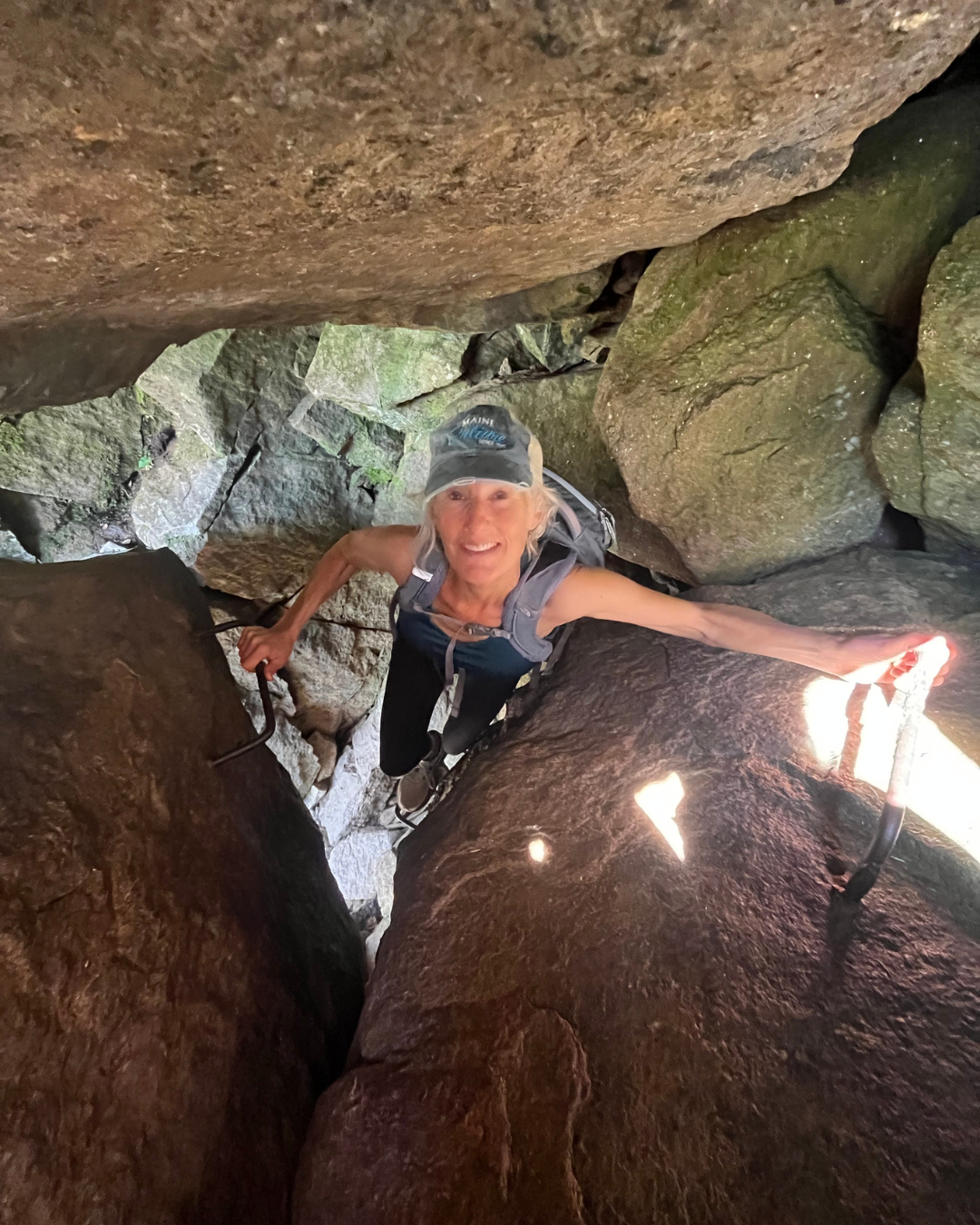
Fat Man’s Misery is a rock formation just below the mountain’s initial peak, creating a fissure—a narrow, chimney lined with iron rungs that help hikers climb through the tight, arduous passage. Standing at its base, I look up and see Kate already near the top, the bright midday sun shining behind her. Below me is the steep descent we have just climbed, strewn with rocks and boulders. I stand there clutching onto a narrow tree trunk that has inconceivably grown up through the rocks and consider my next move. After a moment, I begin the climb through the fissure and quickly realize that I won’t fit through with my backpack on my back. I pause and call up to Kate, and begin to take off my pack. As she reaches down through the chimney, I heave my pack up, pass it to Kate, and with another push, I climb up and through. On the other side of the fissure, I stop, catch my breath, and reflect— sometimes, when we’re on unsteady ground, the only way forward is to allow someone else to hold what we’ve been carrying.
In these moments, there is strength and courage that comes with our willingness to ask for help.
permission to rest
Leaving Fat Man’s Misery behind, we scramble up the final stretch to the peak, motivated by the peanut butter and jelly sandwiches in our packs and a beautiful place to rest and take in the expansive view. After a time, Kate gets up to explore the peak and take photos, and I linger at our picnic spot. Sitting in stillness, feeling the warmth of the sun and the solidity of the rock beneath me, I feel nourished. So often, we pressure ourselves to keep going, pushing through exhaustion, stress, and overwhelm. But rest doesn’t have to be an unavoidable consequence of being unable to go any further; it can instead be a piece of how we sustain ourselves along the way.
a moment of joy
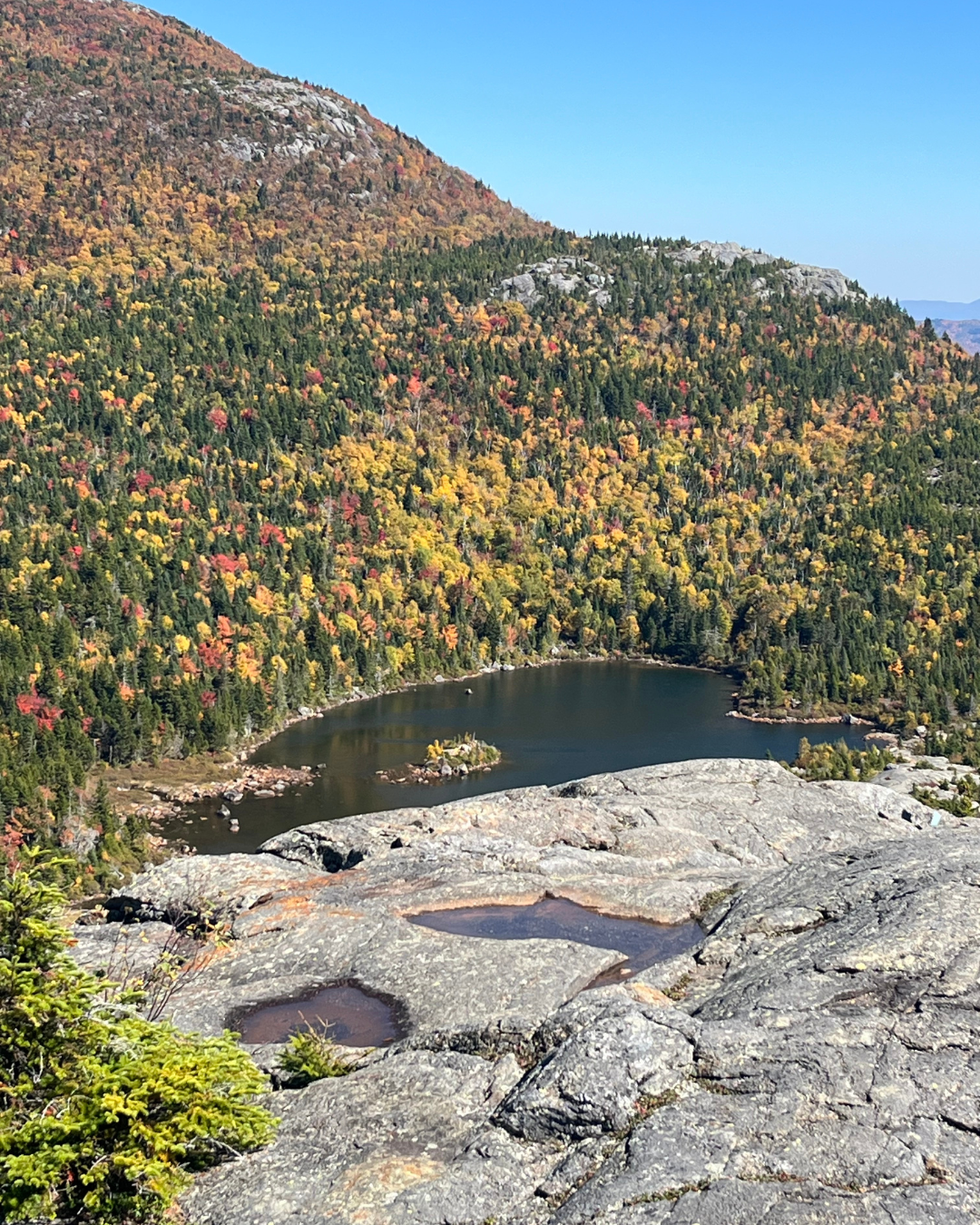
From the summit, we hike along the ridge of the mountain, admiring the vibrant yellows, oranges, reds, and greens of the lichen clinging to the rocks, and stopping periodically to pick from the low-bush blueberries that line our way. Then the path opens up, dips, and we catch a glimpse of our favorite part of the hike—a small spring-fed lake nestled into the rocks, aptly named Crater Lake. When we reach the water, we duck behind a scrub pine, pull on our bathing suits, and jump in, laughing from the shock of the cold.
In that moment, the effort of the climb washes away, and I feel a lightness, a connection to Kate and to the mountain, and a deep sense of freedom from the weight I have been carrying.
the walk back- a time of reflection
Feeling refreshed and rested, we begin our descent along a gentle, shaded trail, filled with birdsong and dappled sunlight. The sounds of a small brook, fed by the lake above, accompany us as we walk. Kate and I make our way down, laughing at the challenges of Fat Man’s Misery, remembering the beauty and expansive view, reminiscing on past hikes, and discussing what we would do next time on our favorite mountain. When we get to the car, we are tired, but in that satisfying way that comes from having moved through something meaningful, and as we make our way home, we bask in a sense of fulfillment, connection, nourishment that so often comes with time spent in the woods.
midlife crossroads
Life can sometimes feel like a long and arduous climb. We begin by carrying what seems necessary—but over time, many of us end up carrying more than our share—responsibilities that don’t belong to us, expectations we never created, beliefs that don’t serve us, and roles that don’t reflect who we truly are. At some point in our lives, the trail before us becomes steeper, and the obstacles become bigger. What once felt manageable now feels heavy, the path ahead grueling, and we need to stop just to catch our breath.
Midlife can feel like this for many women. Our conditioning requires us to push through; keep moving. But what if the remedy isn’t to push harder, carry more? What if it’s simply an invitation to pause, turn inward, and listen? To let go of what is no longer needed? To recognize what is not ours to carry? To permit ourselves to rest, ask for support, and to create the space we need to reconnect with the steady, wise Self within each of us? From this place, the path forward becomes clearer, more easeful, and authentic. Sometimes, the way forward is not to push and force, adding more to our already heavy pack—maybe it’s learning to travel lighter.
If you enjoyed this, please feel free to follow my Substack, where I share stories, insights, and guidance to help you ease the way into your next chapter.
I’m so glad that you are here.